
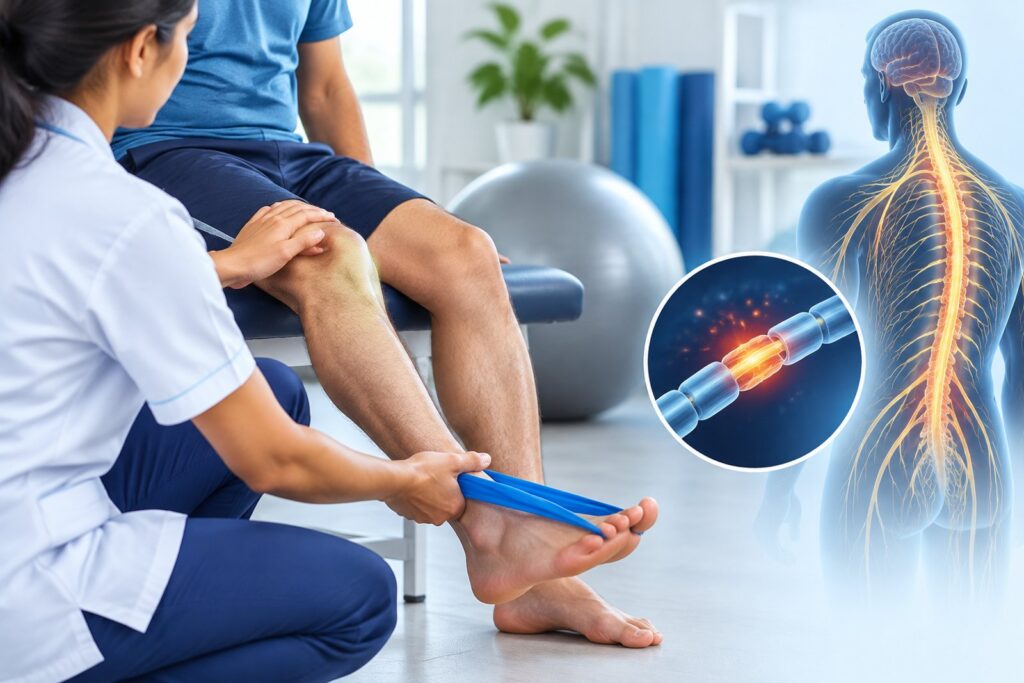
What Is Guillain-Barré Syndrome?
Guillain-Barré Syndrome is a rare nerve disorder. It happens when the body’s immune system attacks the nerves. As a result, people may feel weak or lose movement in their arms and legs. Although this condition can be serious, many people recover with the right care. Early treatment and support, such as physiotherapy, play a big role in Guillain-Barré Syndrome recovery.
Common Symptoms of Guillain-Barré Syndrome
At first, symptoms often start in the feet and hands. Then, they can move up the body. For example, you may notice:
Sometimes, symptoms can get worse quickly. Therefore, it is important to seek medical help right away if you notice these signs.
Causes and Risk Factors
Doctors do not know the exact cause of Guillain-Barré Syndrome. However, it often follows an infection. For instance, a stomach bug or a cold can trigger the condition. In some cases, a recent vaccination or surgery may be linked. Still, these cases are rare. Risk factors include:
Even though anyone can get Guillain-Barré Syndrome, most people recover with proper care.
How Guillain-Barré Syndrome Is Diagnosed
Doctors use several tests to diagnose Guillain-Barré Syndrome. First, they ask about your symptoms and medical history. Next, they may check your reflexes and muscle strength. In addition, doctors often use tests such as:
Early diagnosis helps start treatment sooner, which can improve recovery.
The Role of Physiotherapy in Recovery
Physiotherapy is a key part of rehabilitation after Guillain-Barré Syndrome. Because the condition affects nerves and muscles, many people need help to regain strength and movement. Physiotherapists create a plan that fits each person’s needs. As a result, patients can rebuild their skills step by step. Over time, regular physiotherapy can help people return to daily activities.
Physiotherapy Techniques for Guillain-Barré Syndrome
Many physiotherapy techniques support Guillain-Barré Syndrome recovery. For example, therapists may use:
At first, exercises may be simple. However, as strength improves, therapists add more challenging tasks. This step-by-step approach helps prevent injury and supports steady progress.
Lifestyle Tips for Patients and Families
Living with Guillain-Barré Syndrome can be hard, but small changes can help. For instance, patients and families can:
Because recovery can take time, patience is important. Family support makes a big difference during rehabilitation after Guillain-Barré Syndrome.
Preventing Complications During Recovery
During recovery, some people may face problems like muscle stiffness or infections. Therefore, it is important to watch for warning signs. To help prevent complications, patients should:
Guillain-Barré Syndrome can impact muscle strength, movement, and daily activities. A personalised physiotherapy program focuses on improving mobility, rebuilding strength, and supporting functional recovery through guided exercises and rehabilitation.
Facing mobility challenges during Guillain-Barré Syndrome recovery?
Consult Dr. Sudeshna for expert guidance and personalised physiotherapy support.