
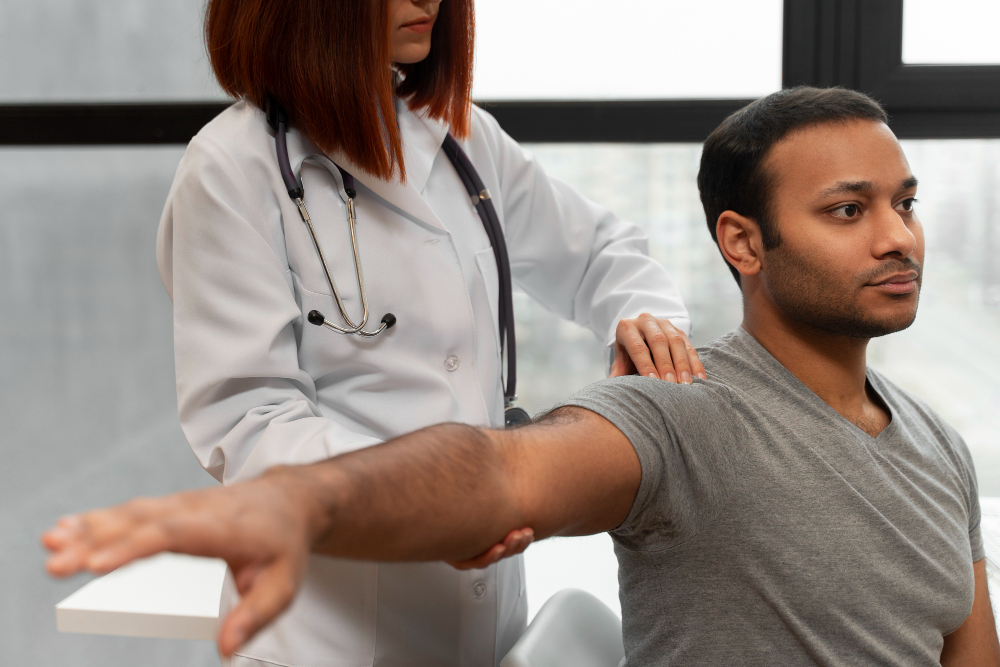
Understanding Shoulder Dislocation in Athletes
Shoulder dislocation is a common sports injury. Many athletes face this problem during games or training. In fact, shoulder dislocation rehab for athletes is often the first step after injury. The shoulder joint is very flexible, but this also makes it easy to dislocate. When the upper arm bone pops out of the shoulder socket, it causes pain and loss of movement.
Symptoms and Causes of Shoulder Dislocation in Sports
Often, athletes feel a sudden sharp pain when the shoulder dislocates. Sometimes, the arm looks out of place. Other symptoms include:
Usually, shoulder dislocation happens during contact sports like football, basketball, or rugby. However, it can also occur from falls or sudden twists. For example, a hard tackle or a fall on an outstretched arm can cause the joint to slip out.
How Doctors Diagnose Shoulder Dislocation
First, a doctor will ask about the injury and symptoms. Next, they will check the shoulder’s shape and movement. Often, an X-ray is used to confirm the dislocation and rule out broken bones. Sometimes, an MRI scan helps check for damage to soft tissues, like ligaments or tendons.
Rehabilitation vs. Surgery: Which Is Better?
After a shoulder dislocation, athletes often wonder about the best treatment. Both rehabilitation and surgery are options. However, many experts suggest starting with non-surgical treatment for shoulder dislocation, especially for first-time injuries.
Let’s compare both options:
According to the American Academy of Orthopaedic Surgeons, most first-time dislocations in young athletes can be managed with rehab. Surgery is usually for repeated dislocations or major injuries.
Benefits of Sport Rehab Over Surgery
Rehabilitation offers many advantages for athletes. For example, it often leads to faster recovery and fewer risks. Here are some key benefits:
Additionally, rehab teaches athletes how to prevent future injuries. Most importantly, it helps them return to sports safely and confidently.
Step-by-Step Guide to the Rehabilitation Process
Rehabilitation for shoulder dislocation follows clear phases. Each phase has specific goals and exercises. Here’s a simple guide:
Throughout rehab, it is important to follow the plan and avoid rushing. Regular check-ins with a sports rehab clinic in your area can help track progress.
Tips for Safe Return to Sports and Preventing Future Dislocations
Returning to sports after a shoulder injury needs caution. To lower the risk of another dislocation, consider these tips:
Moreover, regular follow-up with a physiotherapist can help spot problems early.
Lifestyle and Self-Care Advice During Recovery
While recovering, athletes should take care of their overall health. For example, eating a balanced diet supports healing. Staying hydrated and getting enough sleep also help. Additionally, avoid heavy lifting or risky movements until cleared by your doctor.
Staying positive and patient is key. Although recovery takes time, following your rehab plan will lead to better results.
Conclusion: Choose the Best Path for Your Recovery
In summary, shoulder dislocation rehabilitation for athletes can support safe recovery and a faster return to sports with proper physiotherapy care. For personalized guidance on shoulder dislocation recovery and sports rehab, consult Dr. Sudeshna (Today Physio).